
The Golden Mask (Hmuiper) is a symbol used often in art and writings related to Iunism, and this post aims to discuss what it means, and provide context for its origins and contemporary examples.
Initially, the image of the golden mask was directly pulled from the depictions and beliefs surrounding Doesh Per, or time. As a material, this is consistent with many other cultures historically as gold has a very low reactivity and tarnishes very slowly. Given it’s remarkable luster as well, it comes as no surprise that the material is related to concepts of eternity, enlightenment, and sovereignty. In Iunism, masks were traditionally used to remove physical distinction from others for ritualistic purposes, as well as for theatrical performances and utility needs (such as protecting the face from extreme environmental conditions). Golden masks come about a bit later, during the height of the Kihiro era where there was farther reaching trade and access to materials. Notably, Iuni artisans would accept gold in exchange for their products; but since the gold held no value in Iuni society, it was simply collected to be melted down and used in projects.
The Kihiro era saw not only a boom in trade, but in expanding the symbols, iconography, and canon of Iunism. It was during this period that the different realities were introduced, as well as the concept of non-human people. The reality that is most closely tied to Doesh Pire, Perrohn, is home to the “cunning folk,” which have been tied somewhat to creatures like Djinn or Demons where there is a culture of bargaining that should be avoided. Depictions of the cunning folk that come from the Kihiro era don golden masks; a testament to their intellectual prowess and direct tie to Doesh Pire. Over time, this depiction became more widely used to describe beings that have achieved intellectual enlightenment rather than strictly non-human entities.
In contemporary symbolism, the golden mask has a few variations which expand the meaning it can carry when used in imagery and costume. A traditional, full golden mask is seen as the true enlightenment and centering of the mind. It represents a being that has distanced itself from the needs of the ego, the body, the heart, and/or the shadow. This resembles greatly the concept of enlightenment known to the Asian continent, and the many countries that incorporate it via practices like Buddhism. It can also be used to represent anonymity or community (replacing the face with a golden mask to eliminate person-specific features), and in recent years, has especially taken on a definition related to the mythos surrounding the Iuni character Fate (Fahkt). Fate is said to be the first of the children of Doesh Pire, and wears a golden mask the likes of which reflect all the world. When used in symbolism, then, a full golden mask is thought to express the ideal of reflecting the truth of the world– how the world exists is how the figure wearing it observes and exists within it. In this way, any figure wearing a full golden mask becomes more passive in their presence, but acts as a kind of guide typically inspiring pursuits of curiosity or liberation.
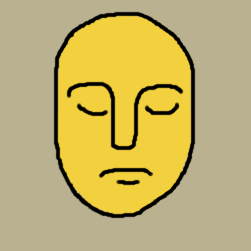
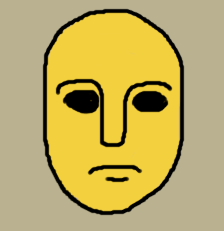
An eyeless golden mask, on the other hand, takes the previously described symbolism of world-reflection and inserts the ego. Cutting the eyes out of the mask is thought to be an act in serving the ego, so that instead of reflecting the world in its entirety, the wearer is seeing the world with their own eyes and instilling their subjective interpretations on it. Neither a full golden mask or an eyeless mask are seen as good or bad, but can be applied as either depending on context.
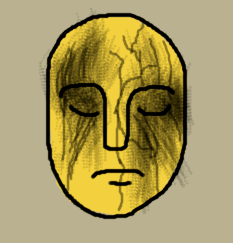
Tarnished masks are not often used, but are a more literal representation of the mind being afflicted with the shadow (meaning the wearer is intellectually blind/ignorant)
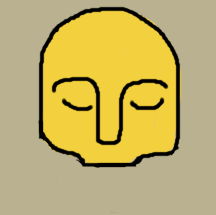
Half-face masks are more common in physical, wearable instances, but less so in imagery and iconography. A half golden mask is thought to represent a more balanced wearer, that the mind is given equal enlightenment as another Self (typically embodied by face paints or coverings of particular colors or textures on the lower half of the face).
 I am and I am not
Leave a comment